
Fulbourn Forum takes a lead in matters concerning the village itself, including planning issues, design guides and the local plan.
A new lease of life for Fulbourn Windmill
Back in the 1960s, I used to cycle quite regularly from my home in Longstanton to meet up with a school friend who lived in Fulbourn. As I slogged up the hill towards Fulbourn Windmill, I remained utterly oblivious to the fact that the Mill at the top of the hill was approaching the nadir of its then 160-year existence.
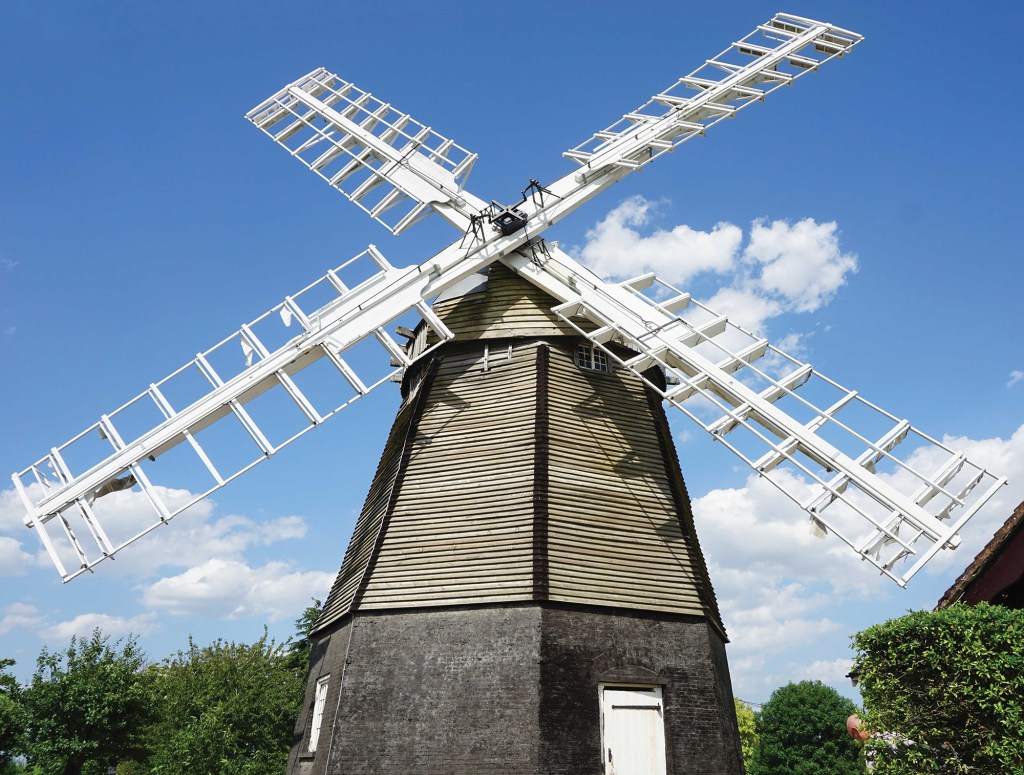
In its heyday, Fulbourn Windmill had been positioned at the heart of the local economy, as were over 200 other mills in Cambridgeshire and Huntingdonshire. BuiIt in 1808 by local landowner and farmer John Chaplin, it had replaced the ancient Fulbourn manorial watermill, which had lost its power source owing to the drainage of Fulbourn Fen to create arable land.
It was not until the second half of the 19th Century that the writing began to appear on the wall for parish windmills, owing to a combination of increasing population and deep agricultural depression. Wheat imported from America and other countries began to compete with the home-grown product and large and efficient steam-powered mills were built at ports and other centres. By 1863, there was even a steam mill at Fulbourn Station.
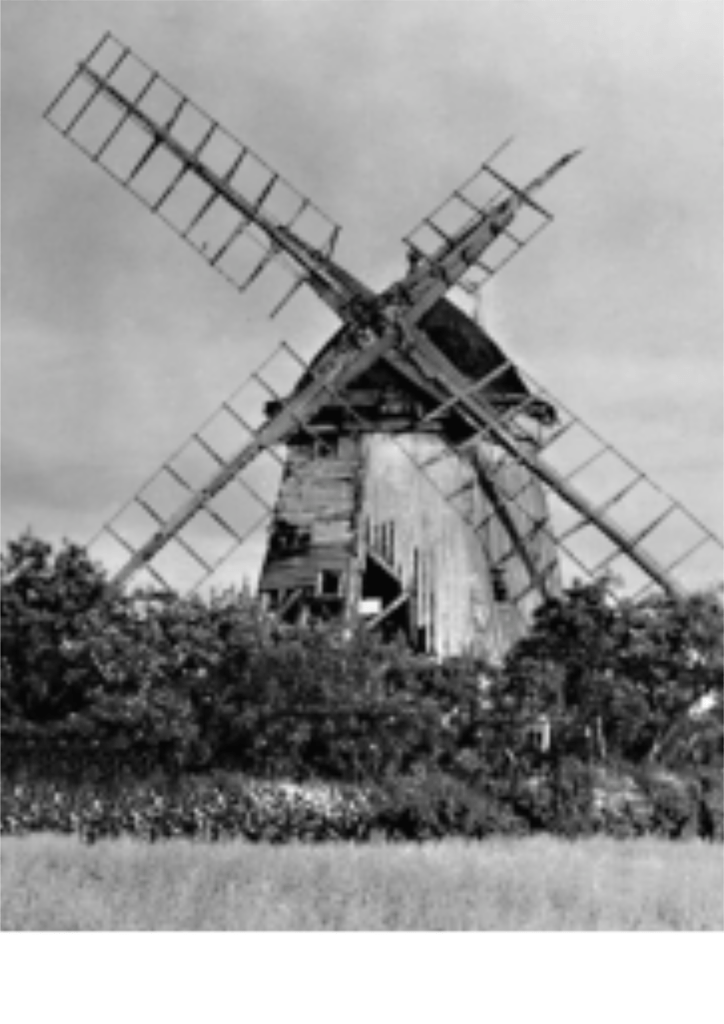
The village windmill declined with the rest, in its final years being reduced to grinding animal feed for local farmers. In 1937, the sails finally ceased turning and, with the outbreak of war, it was tarred over to minimise its undoubted effectiveness as a local landmark.
As recently as the late 1970s, the windmill stood largely ignored and sinking into a state of increasing decrepitude, to the point that Ian Harrison, now the owner of the mill with his wife Prue, estimates that it probably would have ceased to exist in another 10 years. The turnaround began in the 1980s, when Marjorie Townley, mother of Richard Townley, the current owner of Fulbourn Manor, expressed concern about the state of the mill and urged that restoration work should be undertaken.
From that point until the early 2000s, the mill was effectively saved by the previous owners, Paul and Sarah Mardon and a small but dedicated team of volunteers. Through their efforts, it was brought back to the point of being presentable, watertight and with a set of sails that, while not actually being able to turn, certainly looked the part. The Mardons were also instrumental in creating a trust and Windmill Society, the mill being leased by them to the trust, which became responsible for maintenance and restoration.
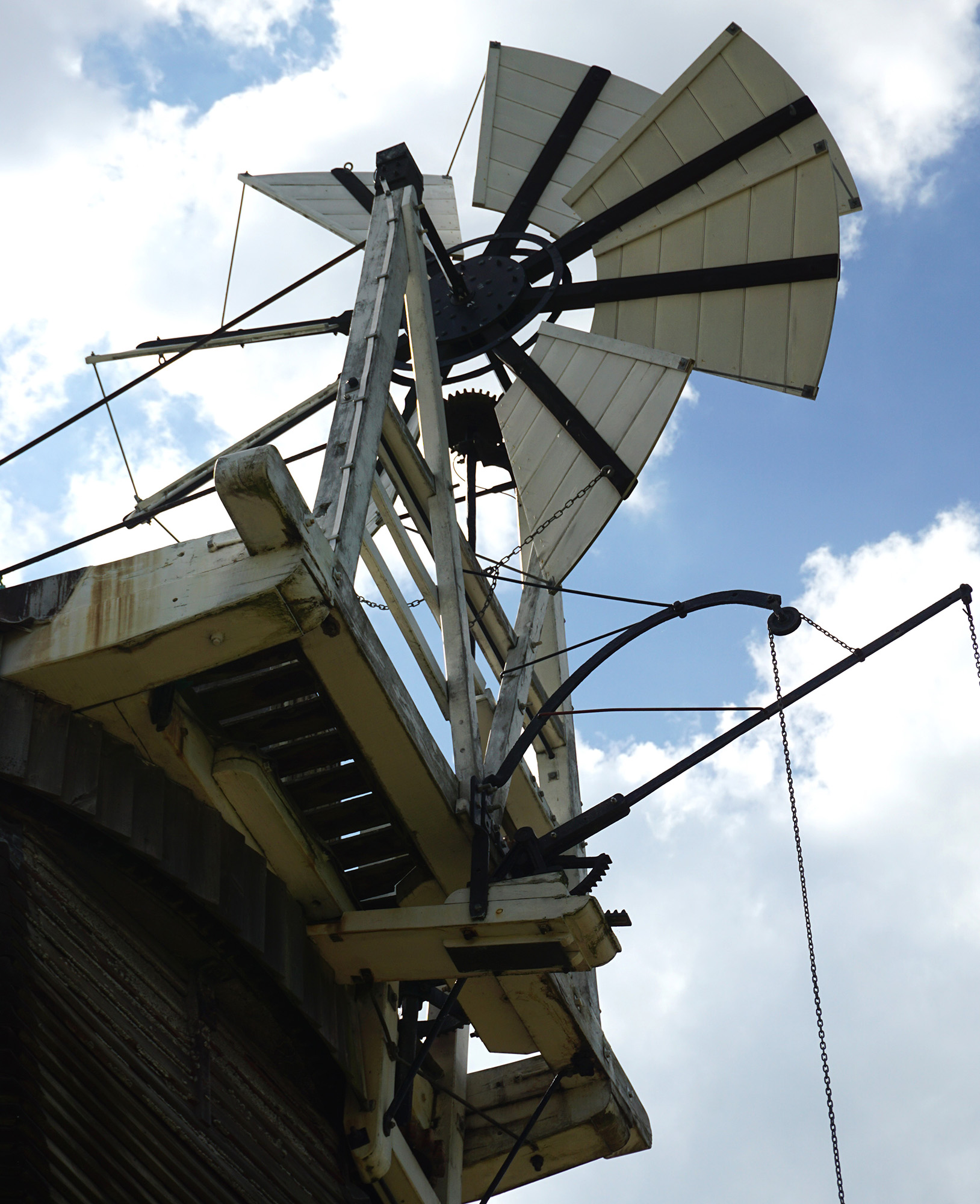
When the Harrisons purchased the mill with associated house and grounds in 2006, they were faced with a continuing need to maintain and improve the mill, together with the fact that the volunteer base was dwindling and would continue to do so as the years took their toll. Nevertheless, the Harrisons kept the effort going and also funded the replacement of the sails and fantail using both professional and volunteer help.
Their aim was to get the sails turning and the fantail to move the cap in order to keep them facing into the wind. “The idea was that the sails would turn and people would look at it and see that’s a proper windmill and it’s moving”, says Ian. Unfortunately, it wasn’t going to be that easy.
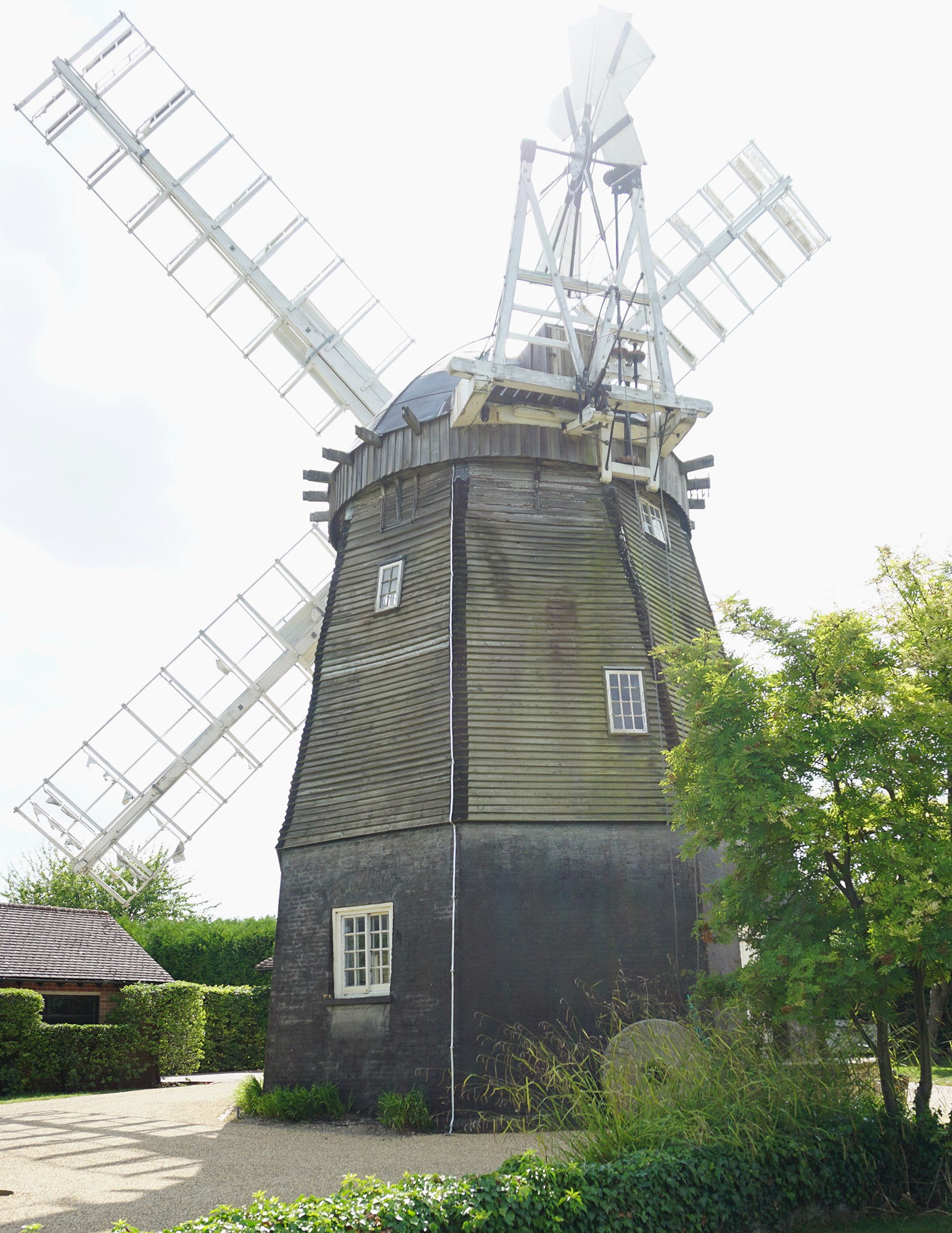
Fulbourn Windmill is 42 feet high and stands 160 feet above sea-level – from the top floor you can see Ely Cathedral on a clear day. It is an octagonal ‘Smock’ mill, the second-generation design used in this country that had a brick base, wooden superstructure and a revolving cap with sails fitted. ‘Smock’ came from the fact that such mills resembled a miller’s smock from the outside. There isn’t room to go into them here, but many of the technologies it contains are surprisingly elegant and effective.
After the mill ceased operations in 1937, it was left with the cap – which weighs 18 tons – in one position, causing movement, distortion and water ingress. The result was damage to the oak ‘cant’ posts that form the octagonal structure, cross bracing and, crucially, the circular ‘kerb’ beam upon which the cap sits and turns, via a set of small wheels. It is essential that the ‘kerb’ is the correct circular shape and sitting level – it isn’t, so the cap won’t move.
There followed a period of introspection, limbo, minimal maintenance, call it what you will, while the Harrisons and remaining volunteers got to grips with the realisation that, despite all the efforts of previous years, the mill had major structural weaknesses that would require hundreds of thousands of pounds to put right. Then came Covid.
As the pandemic subsided, the Windmill Trust was approaching its final days and became dormant in 2021. Before this, however, it was decided to approach Wrights Clock Land CIO, the Fulbourn charitable organisation known for its generosity in the village, to ask if it would fund an expert condition report on the windmill. This it did and the resulting report confirmed everyone’s fears, but also made the point that the problems could all be fixed – at a price.
“We decided to talk to Wrights and say that if we were to set everything up differently and create what was effectively a community facility that was more accessible to the village of Fulbourn, how would they feel about supporting us on the restoration project?”, says Ian. “We were blown away by their generosity when they agreed to help us with a substantial amount of funding”. In the charity’s own words, the objective is “to achieve full operation by temporarily dismantling the cap and sails and extensively repairing the smock tower”. There is obviously a limit to the amount of funding available from the Wrights charity but, as Ian Harrison points out, it will also make it easier to approach other sources about funding for specific sub-projects.
There are conditions, of course. Ian and Prue Harrison will lease the mill to a new trust and a new Fulbourn Windmill Society will be established under that. The Harrisons will also support a programme of ‘managed access’ to the mill by visiting groups, through fixed and regular open days and by members of the public, mainly on a pre-arranged basis in order to minimise the impact on the couple’s privacy.
An exhibition area will be established in the mill and Ian Harrison also sees the potential to use part of it as a workshop for trainee millwrights. “The mill will be a community asset that we will very much want people to get involved with – volunteers maintaining it, painting, greasing, fundraising, educating and generally taking a degree of ownership”.
It is estimated that the work on the mill structure will take about 20 months from its actual starting point, although a limiting factor will be the availability of the expert millwrights, whose skills will be essential for some aspects of the project.
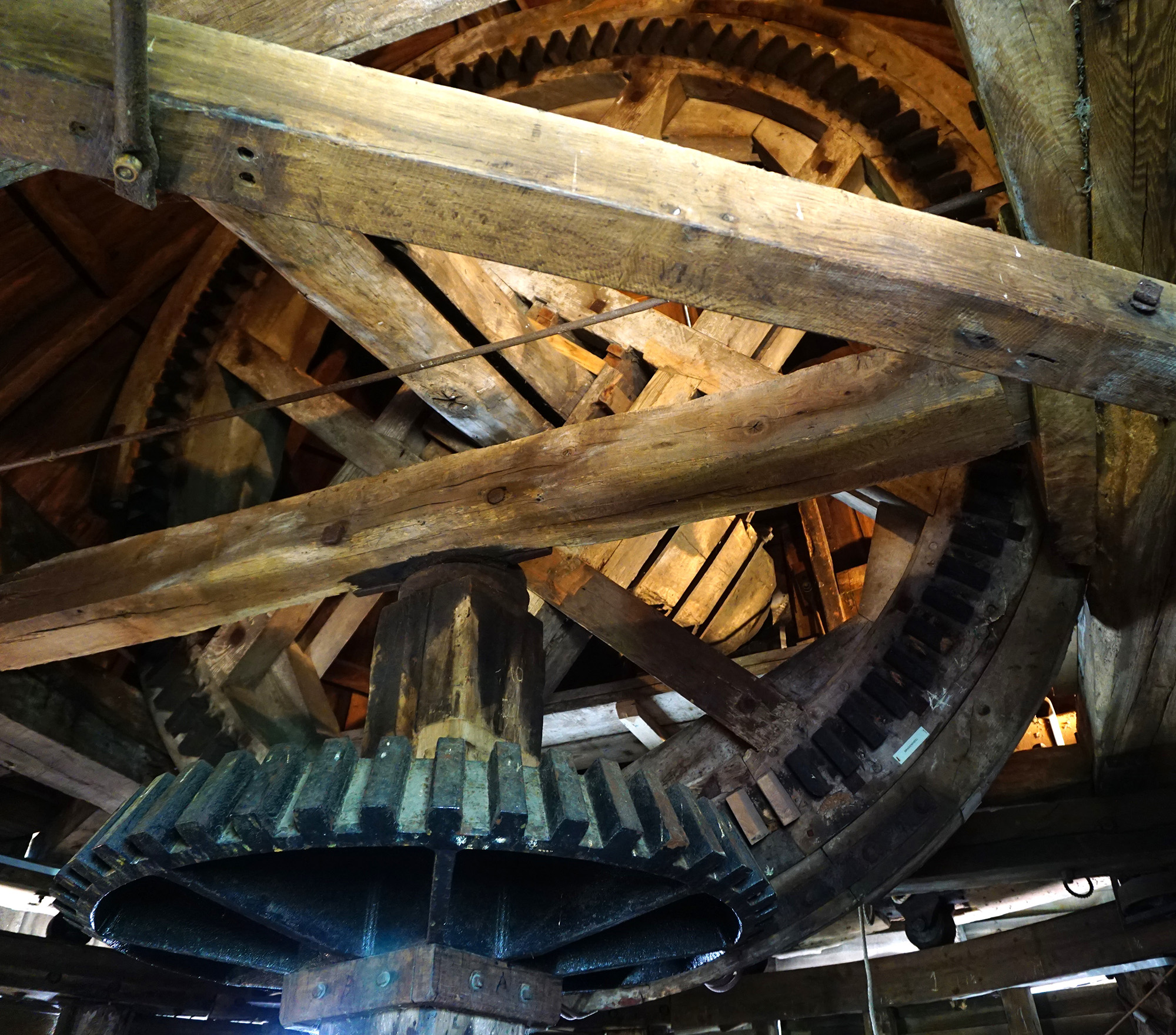
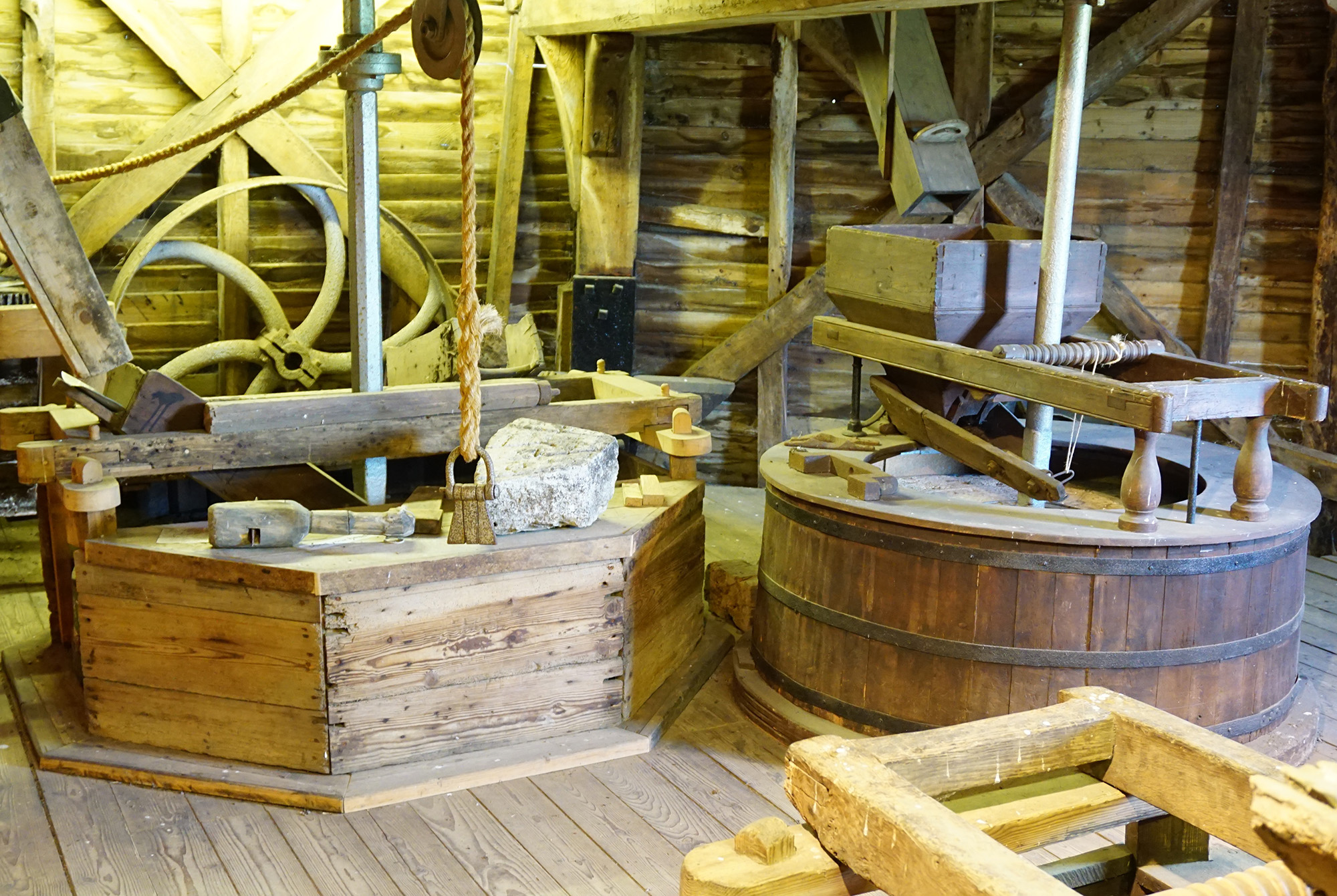
When the cap revolves once more and the sails, shafts and gear wheels turn, the stones grind and the flour flows down the chutes into the bags, it will always be on a low-volume demonstration, rather than production basis. Nevertheless, the day clearly isn’t very far away when someone – probably from the village – bakes the first loaf in a long, long time using stoneground flour from Fulbourn Windmill. Wouldn’t you like a slice?
To keep up-to-date with developments, subscribe to the Fulbourn Windmill newsletter via this link: Fulbourn Windmill
Reprinted from the August 2023 issue of ‘The Mill’, Fulbourn’s parish magazine. Words and pictures by Christopher Meakin. Reproduced by permission of St Vigor’s Church, Fulbourn Parochial Church Council.
20mph Traffic Zones for Fulbourn? – application for funding
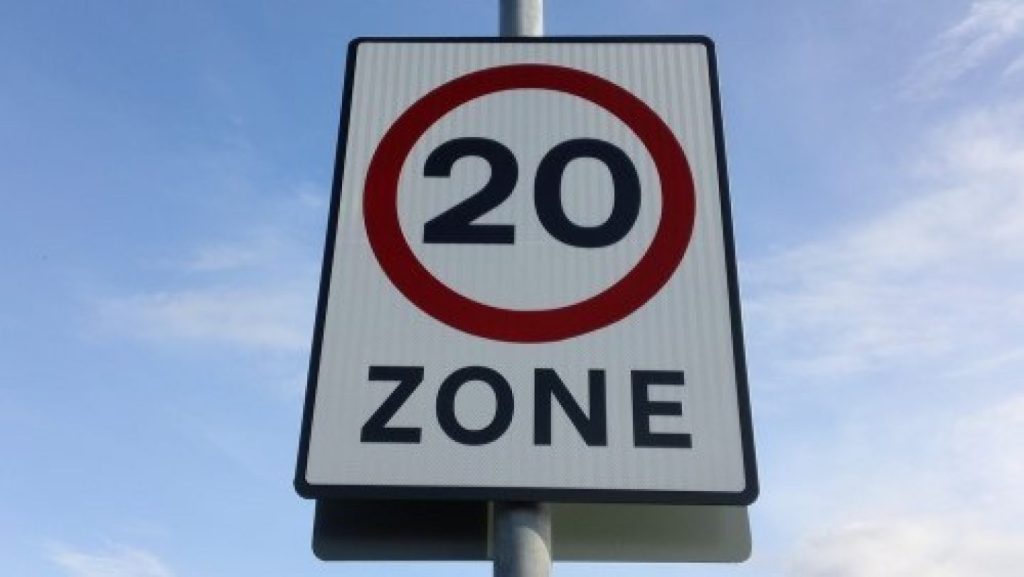
The introduction of 20mph zones and areas for villages and towns has grown apace in the UK with, locally, many now in Cambridge City as well as some already in Cambridgeshire villages such as Godmanchester, Somersham, Toft, Oakington, Barton, Hauxton, Melbourn, Sawston, and Duxford.
The growing body of evidence shows that there are a number of benefits when vehicles keep to this speed, which include: a reduction in pollution, a reduction in noise, a reduction in accidents, and a corresponding increase in safe active travel (namely, walking and cycling). Research suggests that reducing 30mph to 20mph can cut pollution by up to 30%, and reduce the chance of severe or fatal injury in the event of a collision by up to 60% (Source: Cambridgeshire County Council).
Cambridgeshire County Council (CCC) has announced funding of around £150,000 per annum over the next three years to implement up to 8 schemes each year. To comply with guidance from CCC, any application for funding has to provide a) a statement of need (eg current speeding patterns, accidents, vulnerable areas etc), and general support of residents (eg such as that reported in the Fulbourn Neighbourhood Plan).
Fulbourn Parish Council has discussed plans for 20mph, and agreement in principle was given at the PC meeting on 8 March. There are, of course, legal and logistical issues to consider when formulating proposals. To this end, a working group made up of parish councillors, interested local groups (such as Fulbourn Forum), and individual residents of Fulbourn, have commenced meeting to consider a formal application to Cambridgeshire County County. The deadline is Friday 28 April 2023.
In relation to support for such plans, Fulbourn Forum wishes to canvass your opinion. It would be very helpful if you would answer by email the following question:
“Do you agree in principle to a plan that seeks to introduce a 20mph zone or zones
for vehicular traffic in Fulbourn.”
Please reply YES or NO, identifying whether this is on behalf of one or more people at your address.
You may, if you wish, provide evidence, anecdotal or otherwise, in support of your response.
Do share this with any friends or neighbours who you think may be interested. Thank you very much for your help in this matter.
We also plan to extend the canvassing to others in the village via social media such as Facebook.
Fulbourn Neighbourhood Plan
This took place on Thursday 9 February. The question asked was: Do you want South Cambridgeshire District Council to use the Neighbourhood Plan for Fulbourn to help it decide planning applications in the neighbourhood area?
The Declaration of Result of Poll was:
Votes cast in favour of YES – 581 (91.93%)
Votes cast in favour of NO – 51 (8.07%)
Number of ballot papers rejected was 2.
Electorate: 3692 Turnout: 17.17%
The Fulbourn Neighbourhood Plan will now become a Supplementary Planning Document (SPD) alongside the Fulbourn Village Design Guide SPD, both of which must be referred to in any planning application in the parish of Fulbourn.
Cambridge East Community Forum
These occasional Community Forums are organised and hosted in turn by the City Council and South Cambs District Council with the area under consideration including Fulbourn. The aim of the events is to provide residents and stakeholders with updates regarding strategic development sites. In the past this has included Ida Darwin, Fulbourn Hospital, the development north of Cherry Hinton, Marleigh, Cambridge Eastern Access, and Local Plan updates.
https://www.cambridge.gov.uk/cambridge-east-community-forum
Cambridge Eastern Access Consultation
The Greater Cambridge Partnership is consulting on the proposed design for walking, cycling, and public transport improvements on Newmarket Road and the selection of a preferred site for the relocated Newmarket Road Park&Ride. To find out more and to share your views please visit the following website:
https://consultcambs.uk.engagementhq.com/gcp-newmarket-road-23
An online webinar about the proposals takes place on Wednesday 8 February, 6.00 to 7.30pm. Registration to attend can be found on the above link.
The consultation ends at midday on 20 March 2023
 Fulbourn Forum